信息整理:图书馆
在量子力学诞生百年之际,2025年诺贝尔物理学奖被授予约翰·克拉克(John Clarke)、米歇尔·德沃雷特(Michel H.Devoret)和约翰·马丁尼斯(John M.Martinis),以表彰他们在电路中实现宏观量子力学隧穿效应和能量量子化方面的贡献。以下对三位诺奖得主相关主题的学术论文及其相关施引文献展开分析。
一、获奖者发文分析
1979年至今,三位获奖者发表SCIE论文767篇(文献类型限制为“论文”或“综述论文”),主要涉及量子力学、超导科学等领域。论文主要发表在Physical Review Letters,Applied Physical letters,Physical Review B以及Nature等期刊上,发文量前十的期刊详见图1。
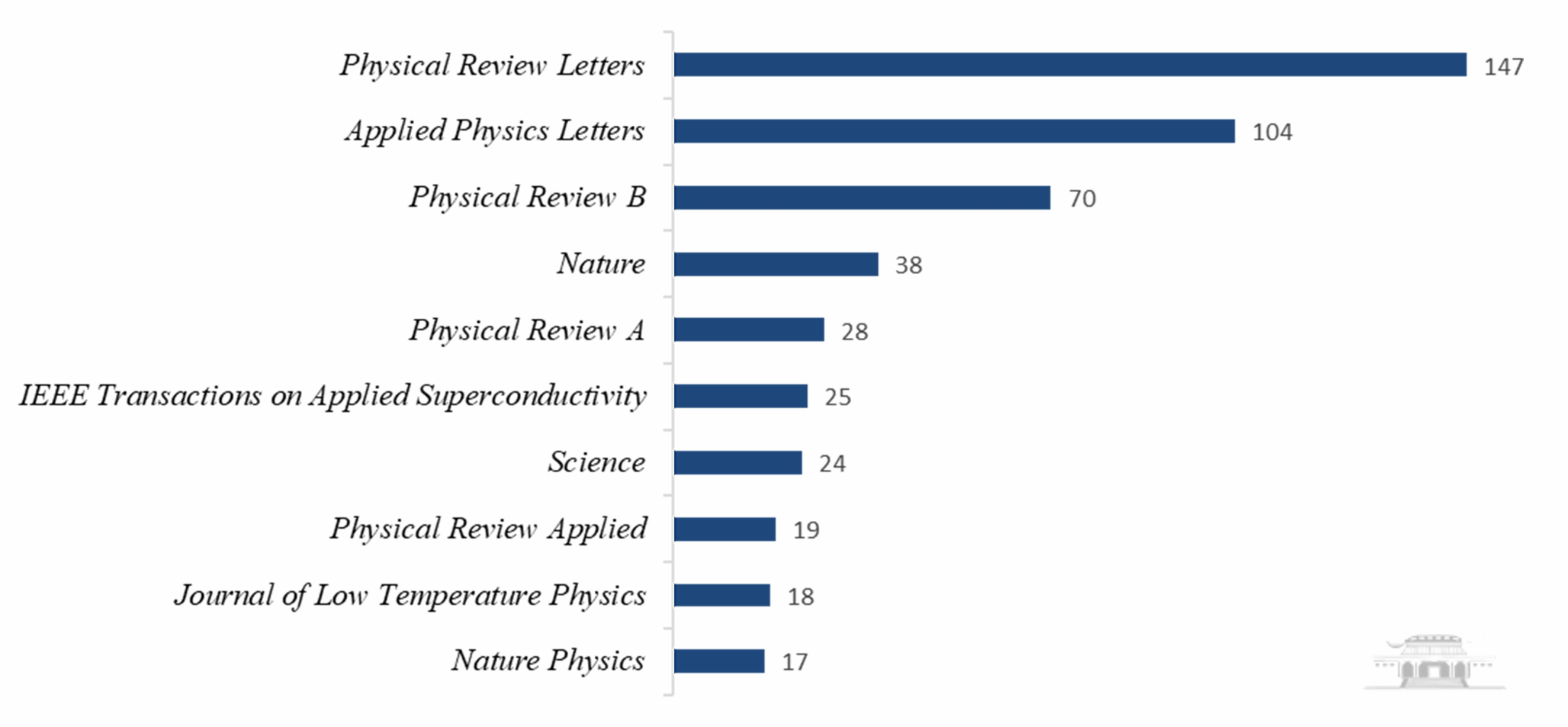
图1 2025年诺贝尔物理学奖获奖者SCIE论文发表期刊TOP10
从出版年来看,三位获奖者在1979年已有发文,发文数量最多的是2013年和2014年(31篇),其次为2016年(28篇),各年度的发文情况如图2所示。
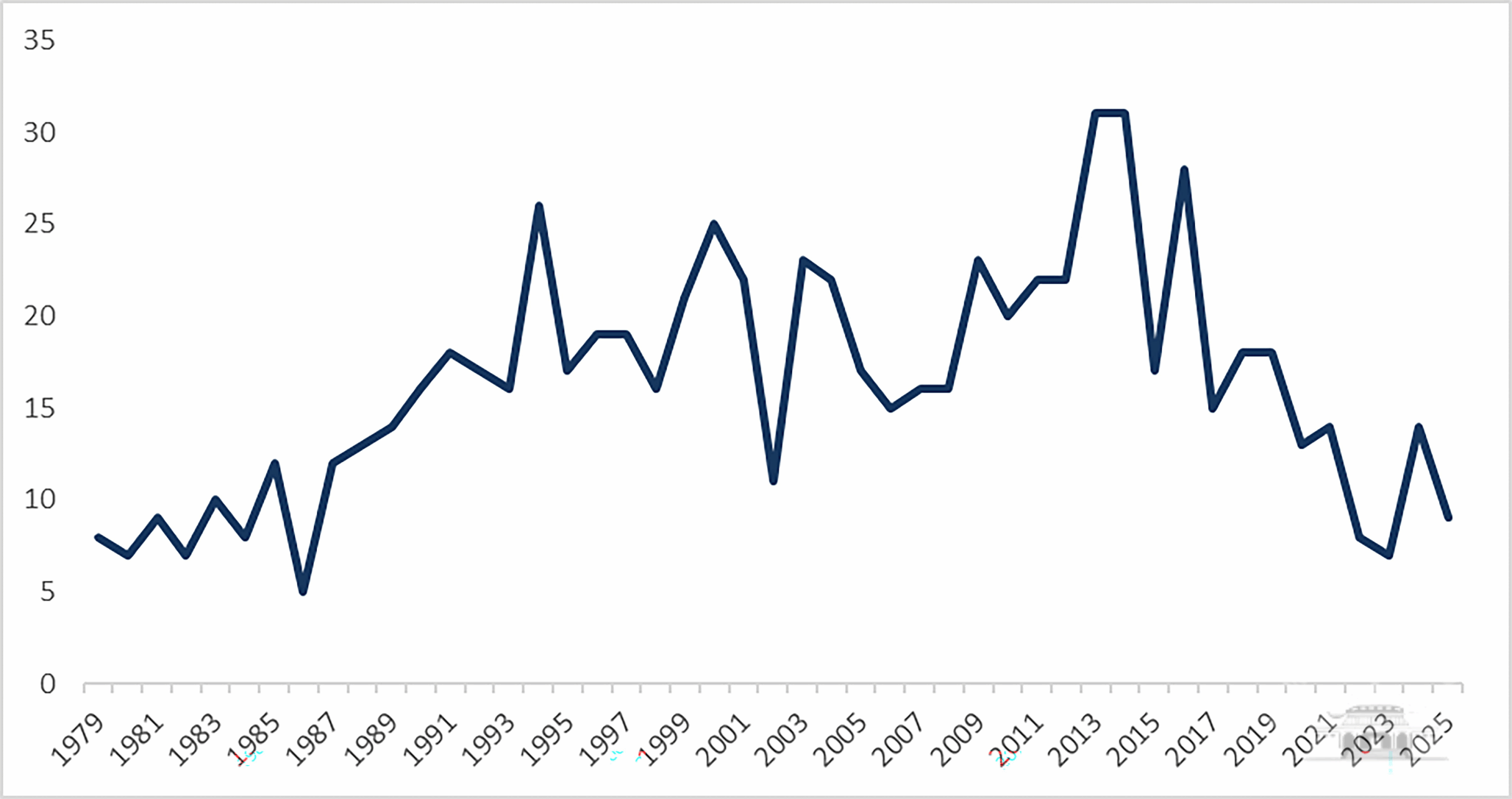
图2 2025年诺贝尔物理学奖获奖者SCIE论文出版年分布
三位获奖者在量子力学领域的奠基性贡献,源于他们于1985年发表在Physical Review Letters上的两篇论文:“Energy-level quantization in the zero-voltage state of a current-biased Josephson junction”首次在宏观尺度上观测到了离散能级结构;“Measurements of macroscopic quantum tunneling out of the zero-voltage state of a current-biased Josephson junction”是宏观量子隧穿(Macroscopic Quantum Tunneling, MQT)的首次实验证实。这些工作首次在实验上揭示了宏观量子效应在超导体系中的存在,为后来的量子电路与量子计算机奠定了物理基础。
当前,获奖者发文中有30篇为ESI高被引论文,1篇为ESI热点论文。单篇论文被引超过1000次的有11篇,其中6篇发表在Nature上、2篇发表在Science上。单篇被引最高的论文为2019年发表在Nature上的“Quantum supremacy using a programmable superconducting processor”,被引5116次。这篇论文由Google AI Quantum团队与约翰·马丁尼斯教授领导的加州大学圣塔芭芭拉分校(UCSB)小组联合完成。这项工作验证了量子计算在原理上确实能够提供指数级的加速潜力,被广泛视为量子计算发展史上的一个里程碑。
二、施引文献分析
截至2025年10月31日,三位获奖者的767篇论文在Web of Science核心合集中被全球47401篇文献引用,总被引99096次,篇均被引129次。受数据库采购范围限制,可供分析的施引文献数量为46733篇。
1、发文国家/地区分布
46733篇施引文献共涉及138个国家和地区。其中美国学者参与的文献数量最多,达15738篇;中国学者参与的有7937篇,居第二;德国学者参与的为5958篇,居第三。施引文献发文量前十的国家/地区详见图3。
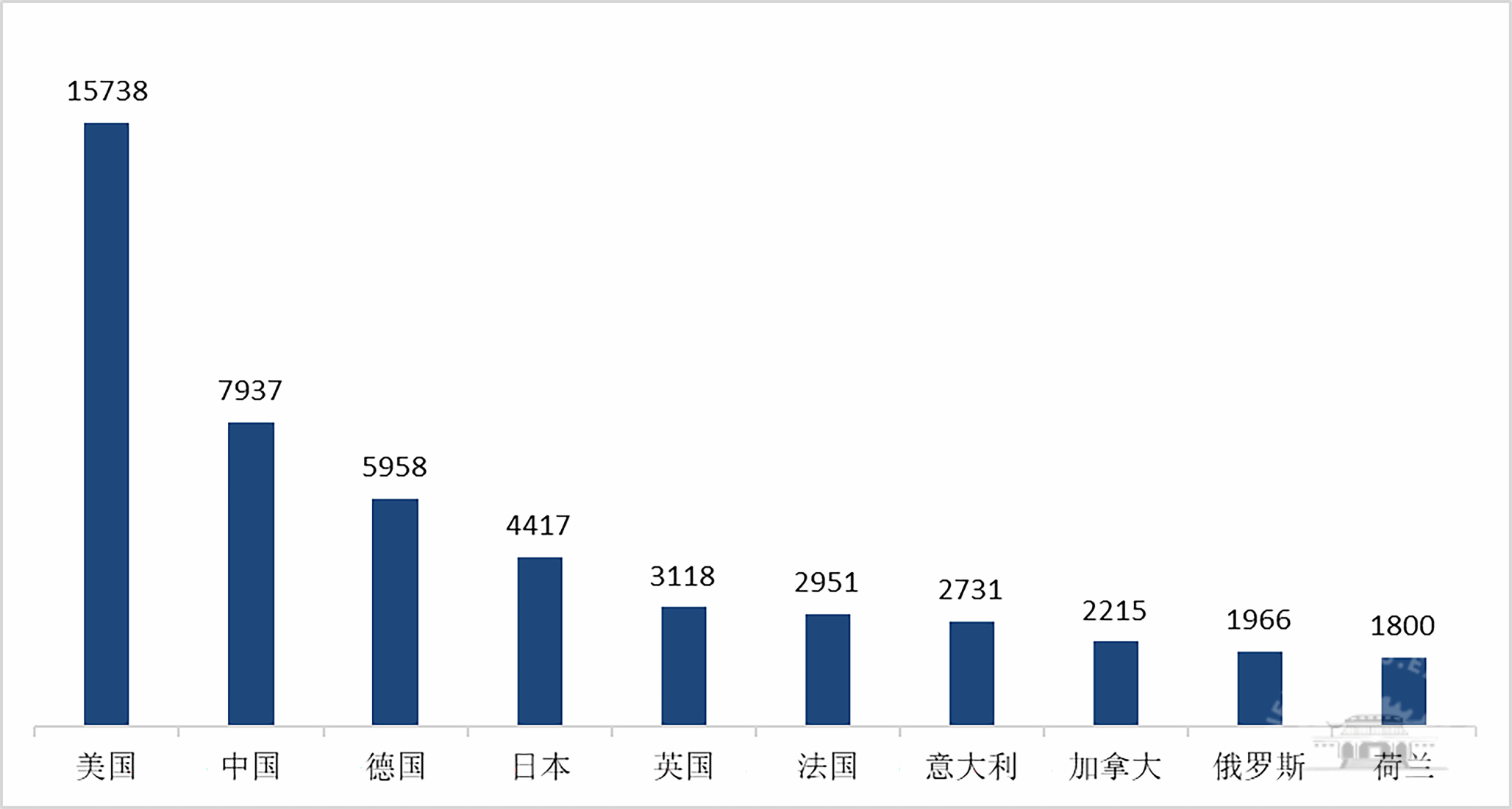
图3 2025年诺贝尔物理学奖相关施引文献发文量TOP 10的国家/地区
2、发文机构分布
全球施引文献发文机构中,发文量最多的是加利福尼亚大学系统、其次是法国国家科学研究中心和美国能源部,中国科学院居全球第四。
发文量前十的全球机构详见图4,发文量前十的中国机构详见图5。
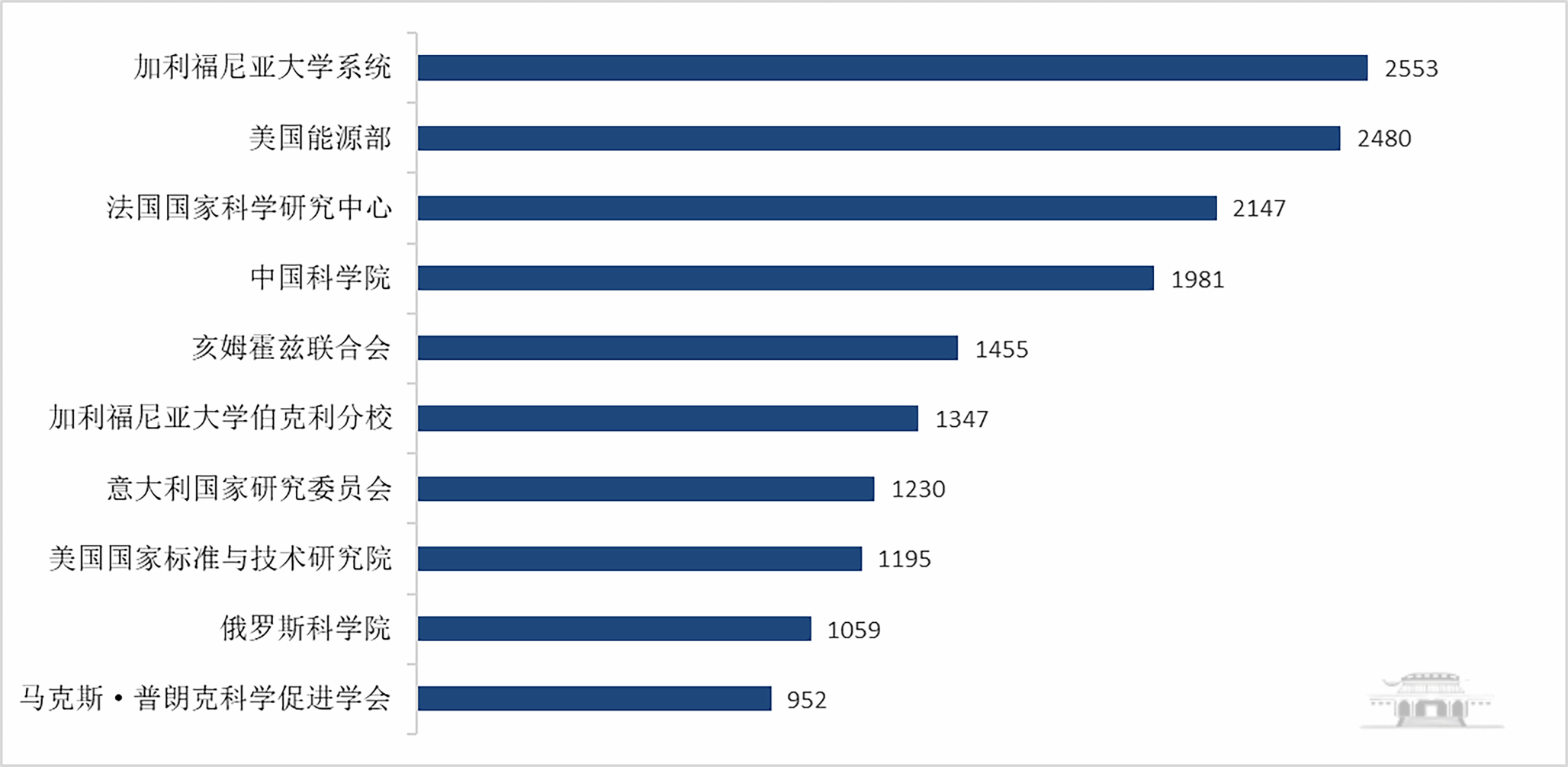
图4 2025年诺贝尔物理学奖相关施引文献全球发文量TOP10的机构
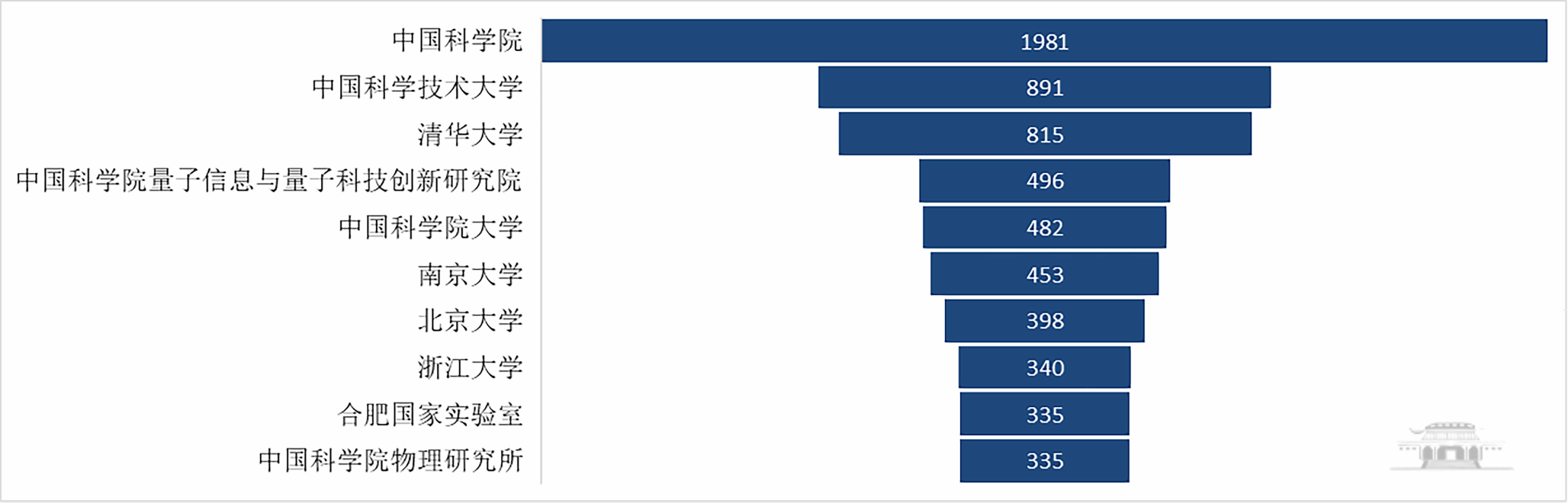
图5 2025年诺贝尔物理学奖相关施引文献发文量TOP10的中国机构
3、ESI高被引论文
当前,施引文献中ESI高被引论文为717篇。按WoS中观主题划分,量子力学领域的论文数量达499篇,占比高达70%;其次为粒子与场领域(56篇)、超导科学领域(46篇)、半导体物理领域(44篇)和二维材料领域(17篇);其他领域的论文数量均低于10篇。
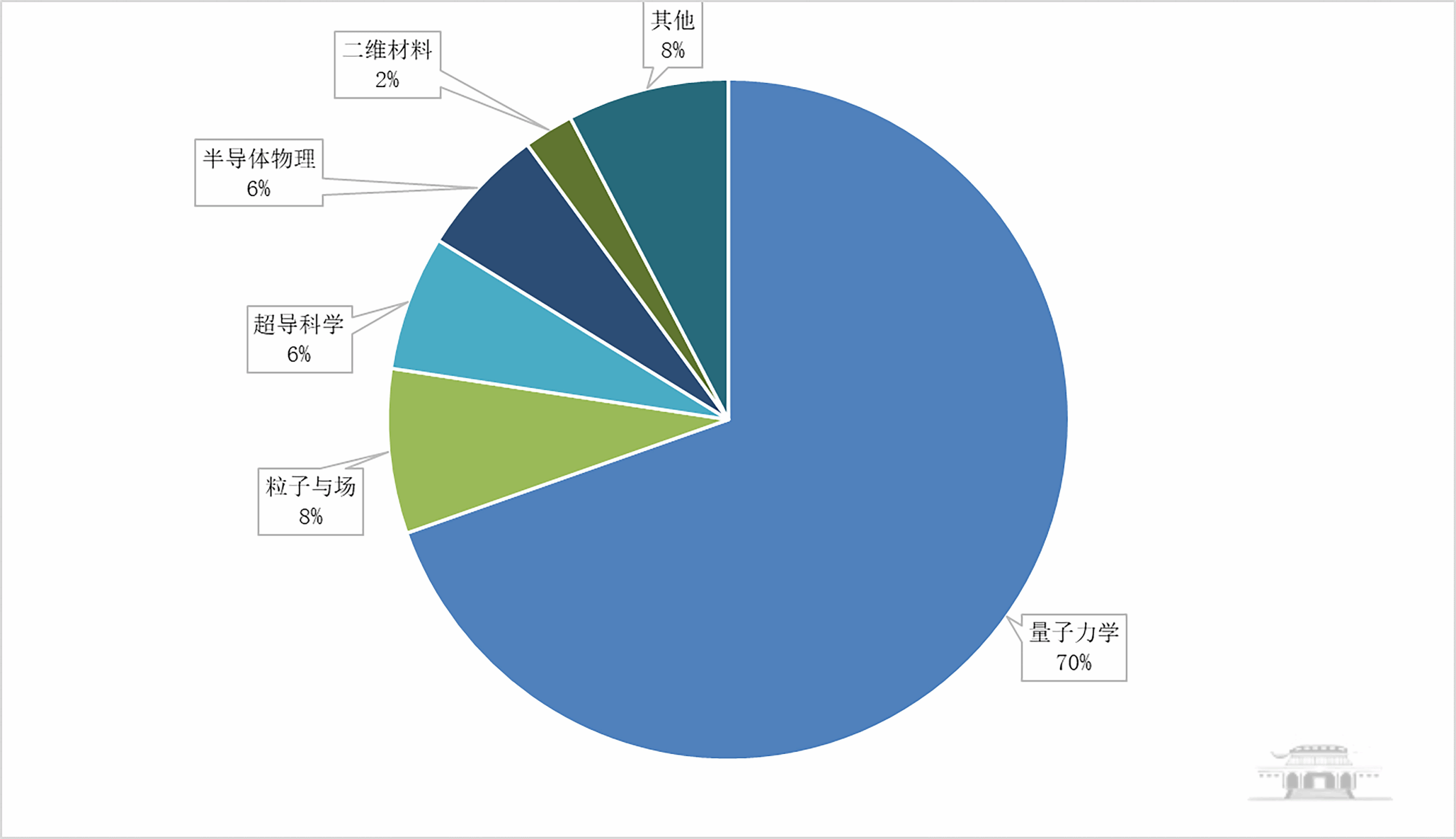
图6 2025年诺贝尔物理学奖相关施引文献中ESI高被引论文WoS中观主题划分
4、关键词分析
使用VOSviewer对近两年发表的5632篇施引文献(文献类型限制为“论文”)的作者关键词进行词频统计和聚类分析,可得如图7所示网络图。图中节点大小表示关键词热度,节点颜色区分研究主题方向,而节点位置能反映其在知识网络中的中心性。其中,量子计算(quantum computing)出现356次,是出现频率最高的关键词;其次是量子比特(qubit),它是量子计算的基本信息单位,出现126次;量子机器学习(Quantum Machine Learning)出现69次,排名第三,它是将量子计算和机器学习相结合的新兴领域,利用量子计算的特性来解决传统计算机难以处理的复杂问题。接下来依次是:逻辑门(Logic Gates)出现59次,量子退火(Quantum Annealing)出现52次,量子线路(Quantum Circuits)出现52次。
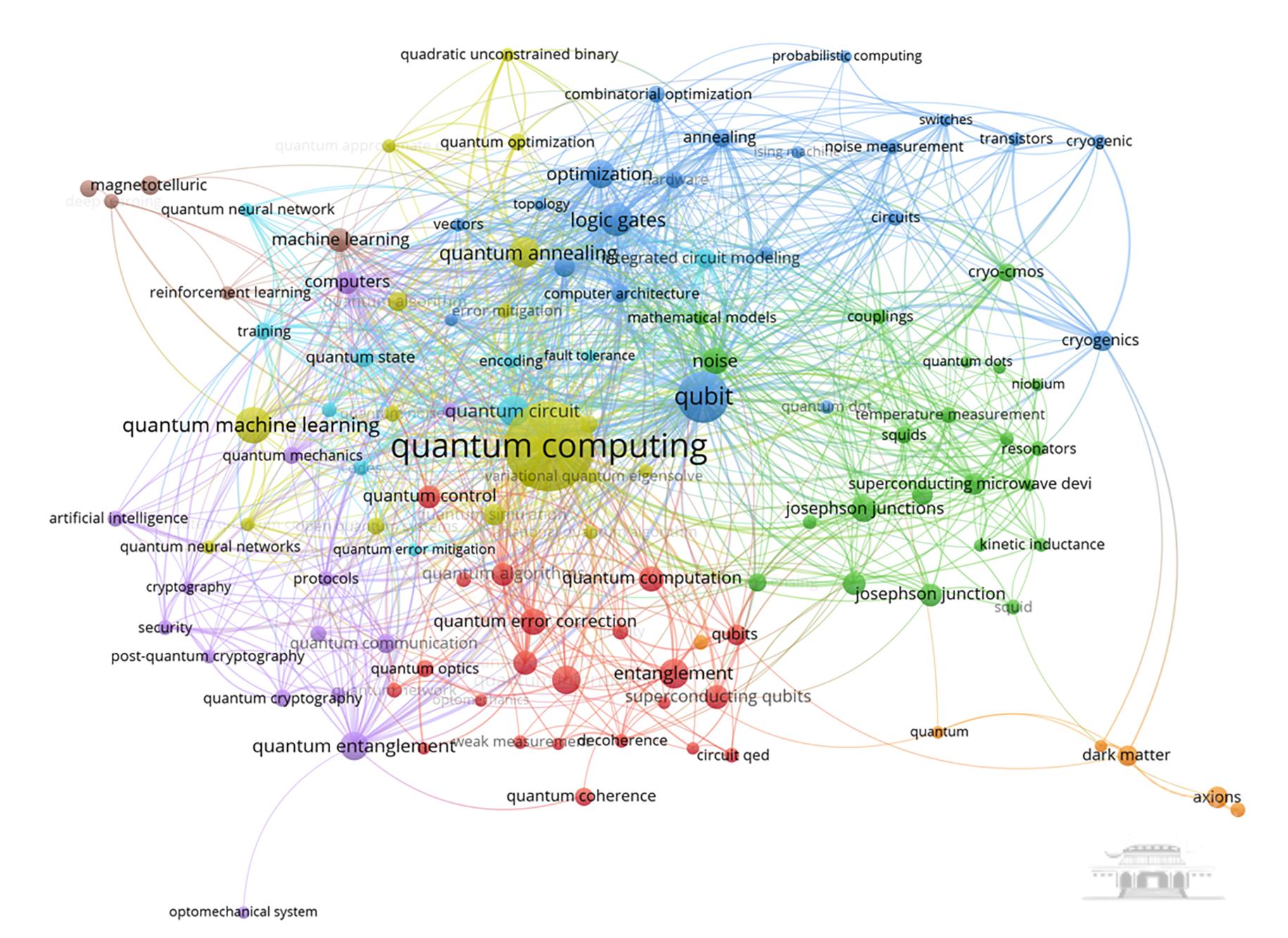
图7 2025年诺贝尔物理学奖近两年施引文献中高频关键词共现图
三、相关主题高影响力论文
截至2025年10月31日,三位获奖者发文中被引超过1000次的相关主题论文有11篇,具体如下:
1.Arute F, Arya K, Babbush R, et al.Quantum supremacy using a programmable superconducting processor[J]. Nature, 2019, 574(7779): 505-510.
2.Barends R, Kelly J, Megrant A, et al.Superconducting quantum circuits at the surface code threshold for fault tolerance[J]. Nature, 2014, 508(7497): 500-503.
3.Devoret M H, Schoelkopf R J.Superconducting circuits for quantum information: An outlook[J]. Science, 2013, 339(6124): 1169-1174.
4.Fowler A G, Mariantoni M, Martinis J M, et al.Surface codes: Towards practical large-scale quantum computation[J/OL]. Physical Review A, 2012,(2012-09-18)[2025-11-03]. https://doi.org/10.1103/PhysRevA.86.032324.
5.O'connell A D, Hofheinz M, Ansmann M, et al.Quantum ground state and single-phonon control of a mechanical resonator[J]. Nature, 2010, 464(7289): 697-703.
6.Clerk A A, Devoret M H, Girvin S M, et al.Introduction to quantum noise, measurement, and amplification[J]. Reviews of Modern Physics, 2010, 82(2): 1155-1208.
7.Clarke J, Wilhelm F K.Superconducting quantum bits[J]. Nature, 2008, 453(7198): 1031-1042.
8.Majer J, Chow J M, Gambetta J M, et al.Coupling superconducting qubits via a cavity bus[J]. Nature, 2007, 449(7161): 443-447.
9.Koch J, Yu T M, Gambetta J, et al.Charge-insensitive qubit design derived from the cooper pair box[J/OL]. Physical Review A, 2007,(2007-10-12)[2025-11-03]. https://doi.org/10.1103/PhysRevA.76.042319.
10.Vion D, Aassime A, Cottet A, et al.Manipulating the quantum state of an electrical circuit [J]. Science, 2002, 296(5569): 886-889.
11.Tans S J, Devoret M H, Dai H J, et al.Individual single-wall carbon nanotubes as quantum wires[J]. Nature, 1997, 386(6624): 474-477.
三位获奖者论文的施引文献中近两年发表、中国学者参与的当前ESI高被引论文共13篇,具体如下:
1.Guo S A, Wu Y K, Ye J, et al.A site-resolved two-dimensional quantum simulator with hundreds of trapped ions[J]. Nature, 2024, 630(8017): 613–618.
2.Aad G, Abbott B, Abeling K, et al.Observation of quantum entanglement with top quarks at the atlas detector[J]. Nature, 2024, 633(8030):542–547.
3.Wang C, Liu F M, Chen M C, et al.Realization of fractional quantum hall state with interacting photons[J]. Science, 2024, 384(6695): 579-584.
4.Meesala S, Wood S, Lake D, et al.Non-classical microwave-optical photon pair generation with a chip-scale transducer[J]. Nature Physics, 2024,20(5):871–877.
5.Ding X, Guo Y P, Xu M C, et al.High-efficiency single-photon source above the loss-tolerant threshold for efficient linear optical quantum computing[J]. Nature Photonics, 2025, 19(4): 387–391.
6.Qiu J W, Liu Y, Hu L, et al.Deterministic quantum state and gate teleportation between distant superconducting chips[J]. Science Bulletin, 2025, 70(3): 351-358.
7.Qiao C, Li M J, Liu Y, et al.Transitioning from federated learning to quantum federated learning in internet of things: A comprehensive survey[J]. IEEECommunications Surveys and Tutorials, 2025, 27(1): 509-545.
8.Li L X, Li J, Song Y Q, et al.An efficient quantum proactive incremental learning algorithm[J/OL]. Science China-Physics Mechanics & Astronomy,2025,(2024-10-22)[2025-11-03]. https://doi.org/10.1007/s11433-024-2501-4.
9.Du F F, Ma M, Bai Z Y, et al.Generation of arbitrary high-dimensional qudit-based entangled states[J/OL]. Physical Review A, 2025,(2025-03-06)[2025-11-03]. https://doi.org/10.1103/PhysRevA.111.032604.
10.Dong H, Zhang P F, Da C B, et al.Measuring the spectral form factor in many-body chaotic and localized phases of quantum processors[J/OL]. Physical Review Letters, 2025,(2025-01-02)[2025-11-03]. https://doi.org/10.1103/PhysRevLett.134.010402.
11.Bilal A, Shafiq M, Obidallah W J, et al.Quantum computational infusion in extreme learning machines for early multi-cancer detection[J/OL]. Journal of Big Data, 2025,(2025-02-06)[2025-11-03]. https://doi.org/10.1186/s40537-024-01050-0.
12.Zhang X C, Hu Z Y, Liu Y C.Fast generation of GHZ-like states using collective-spin XYZ model[J/OL]. Physical Review Letters, 2024,(2024-03-12)[2025-11-03]. https://doi.org/10.1103/PhysRevLett.132.113402.
13.Qin W, Kockum A F, Muñoz C S, et al.Quantum amplification and simulation of strong and ultrastrong coupling of light and matter[J/OL]. Physics Reports-Review Section of Physics Letters, 2024,59(2024-05-23)[2025-11-03]. https://doi.org/10.1016/j.physrep.2024.05.003.
纰误之处,敬请批评指正!同时,也面向全校师生征集关注的领域和专题。联系方式:68779263,Email:kyzh@whu.edu.cn。
(编辑:张开阳、江珊 审核:盛芳、刘颖)